Prime Readymade次日达现成品
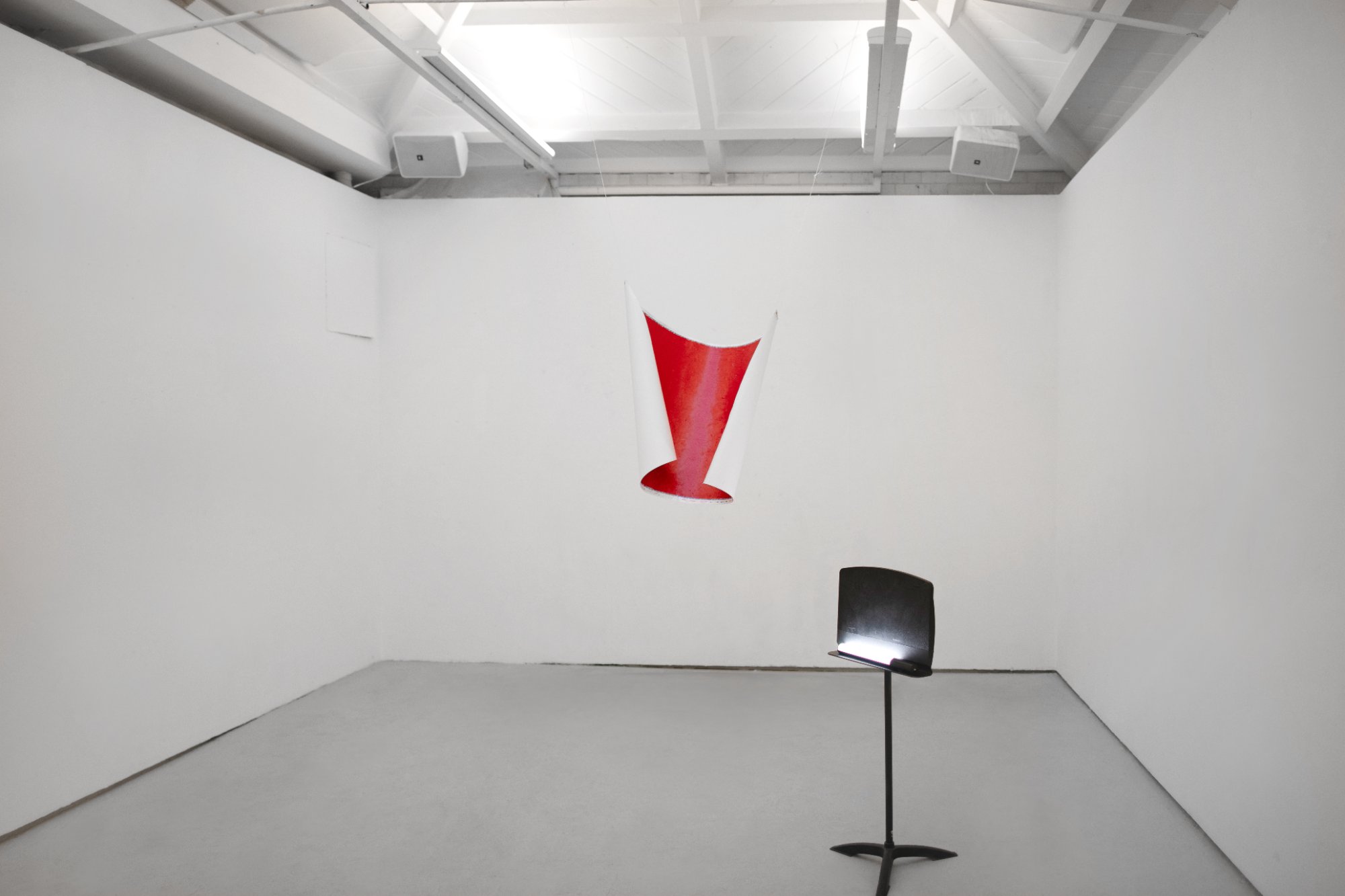
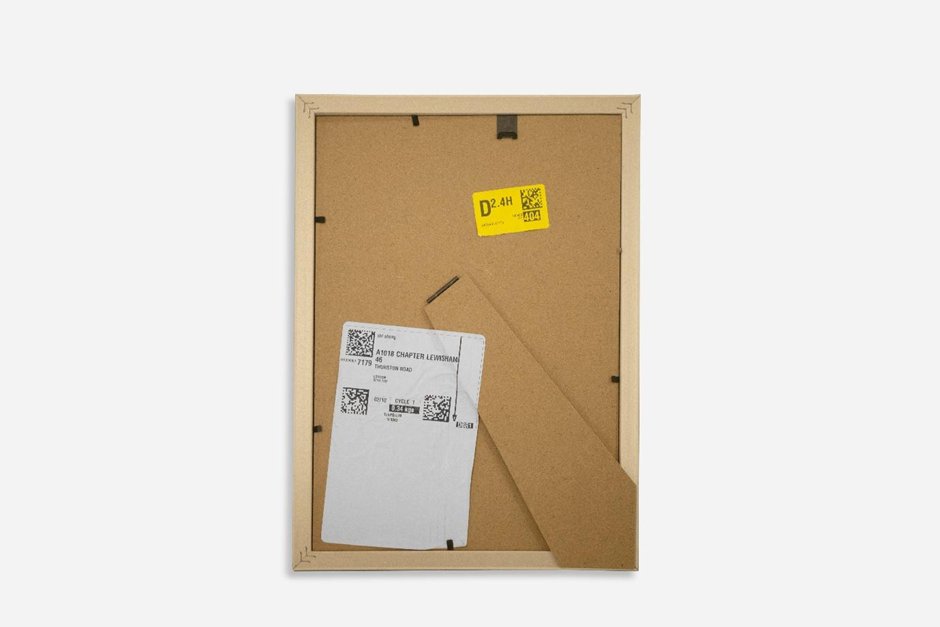
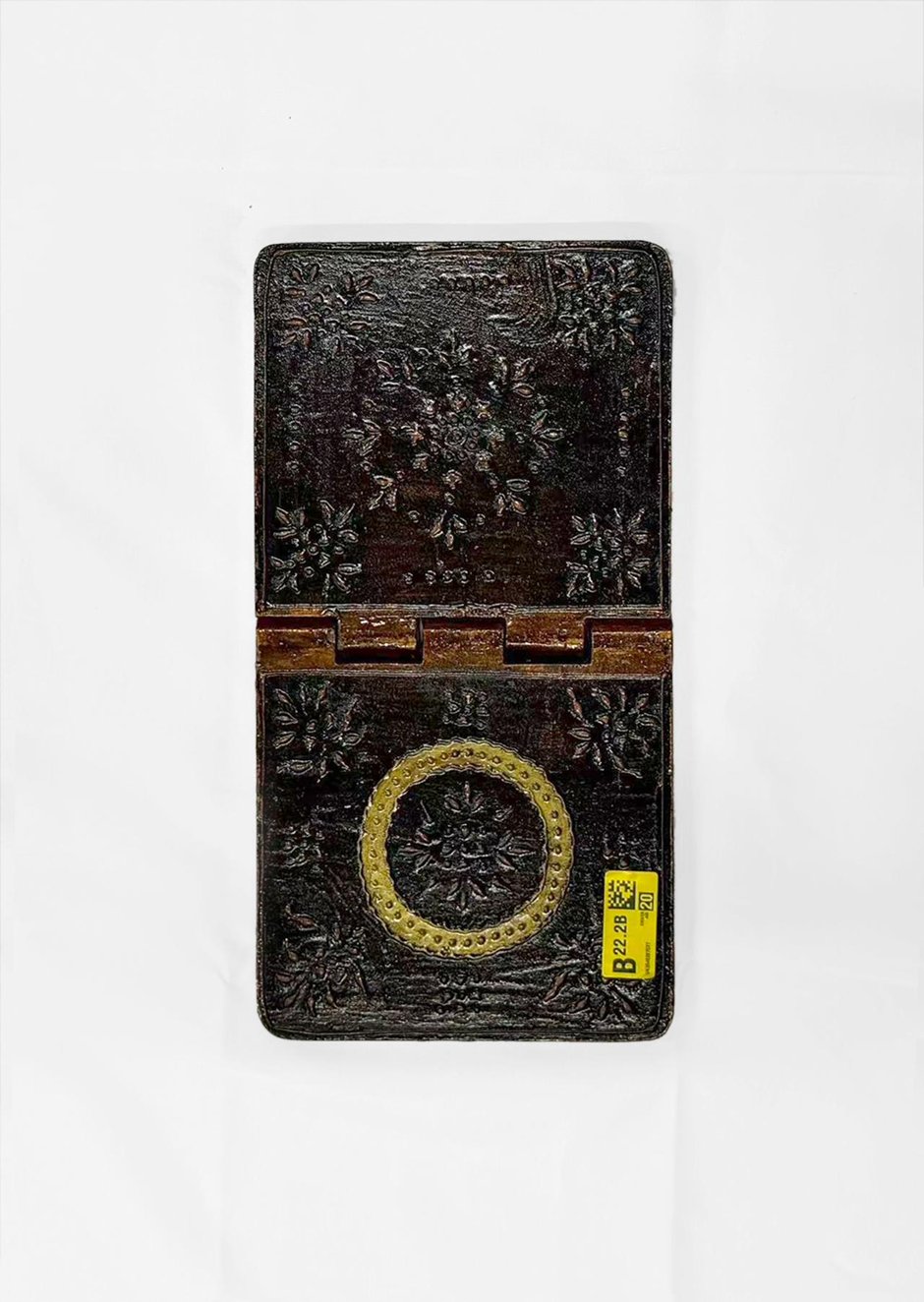
All the readymade materials for my works are purchased from Amazon with next-day delivery, and I keep the delivery label and place it in a hidden corner of each piece. I call this method Prime Readymade (次日达现成品). It takes the readymade from Duchamp and Prime from the platform, and asks what is left of the artist's act of selection when the shop has become infrastructure. Prime is Amazon's paid membership, which sells next-day delivery as a privilege. To prime is also to prepare in advance. Both meanings matter here.
Duchamp's readymade turns an industrially made object into art through the artist's act of choosing it, ideally with what he called visual indifference. The shop behind that gesture was neutral: a place where objects waited to be picked. Amazon is not that kind of shop. What I am able to buy is already filtered by search ranking, recommendation and Prime eligibility, and the object I choose is one that a warehouse has already stocked near me. My selection comes after the platform's.
Next-day is not only a delivery speed. It says that the object is already waiting nearby, positioned in advance by a prediction of what I will want. Amazon has patented a method it calls anticipatory package shipping, which sends goods toward a region before any order exists. Here the object is primed: not only already manufactured but already placed, ready before I am. This is the platform's version of the readymade, and I work inside it.
This is where technofeudalism becomes concrete. Varoufakis argues that we are no longer living in capitalism but have entered a new form of feudalism. The lords are platform companies like Amazon and Google, and what they collect is rent, not profit won in competitive markets. Prime is the household version: a recurring fee for the right to be served first. In medieval times, peasants had to farm on the lord's land and pay rent. Today, if you want to buy things, sell things, or simply exist, you must go through these platforms, paying a "toll" at every step. When I need materials, theoretically I could go to physical stores. In practice Amazon's network has spread too wide: logistics, warehousing, payment systems, and even the cloud storage I use probably runs on AWS. Bypassing it is both inconvenient and uneconomical. You think you are making free choices, but you are operating inside an ecosystem controlled by a single entity.
Next-day also names a compression of time. The day between wanting and having is where hesitation, comparison and doubt would happen. Next-day delivery shortens that interval to something the platform schedules, so the object arrives before the desire has been questioned. It is the uninterrupted time Jonathan Crary describes in 24/7, and it belongs to the same condition that runs through my other work: the view is already occupied before we judge.
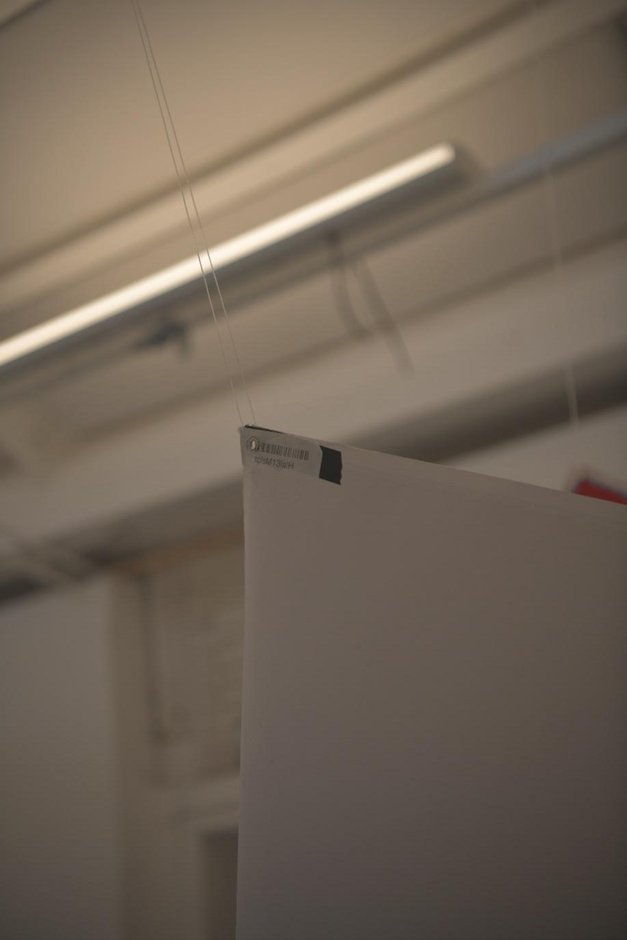
Duchamp's authorship was carried by a signature and a title: R. Mutt, Fountain. In my work the delivery label is a second signature that is not mine. It records the warehouse, the courier, the address, the date and a tracking number, a biography of the object that lives on the platform's servers and not in my studio. Each work therefore has two bodies, the object I show and a ledger I cannot see. The labels are intentionally hidden, not displayed on the surface. You have to turn the work over, bend down, and look carefully to find them. This mirrors how technofeudalism operates: it does not rely on obvious coercion but quietly penetrates through convenience, efficiency, and the reality of "no alternative."
There is a real contradiction in this gesture. On one hand, the labels make the dependency visible. They function like an ingredients list, telling you that the object is made not just of glass or paper but also of Amazon's logistics network. On the other hand, the gesture admits that I cannot escape. I am not claiming "I resist Amazon." I am saying: look, even critique must be built with their materials. Medieval serfs had to provide both grain and labour service. We pay money and also "freely" provide behavioural data, which may be worth more than the products themselves. Even the tools you use to resist arrive the next day.
Perceptual Cartography
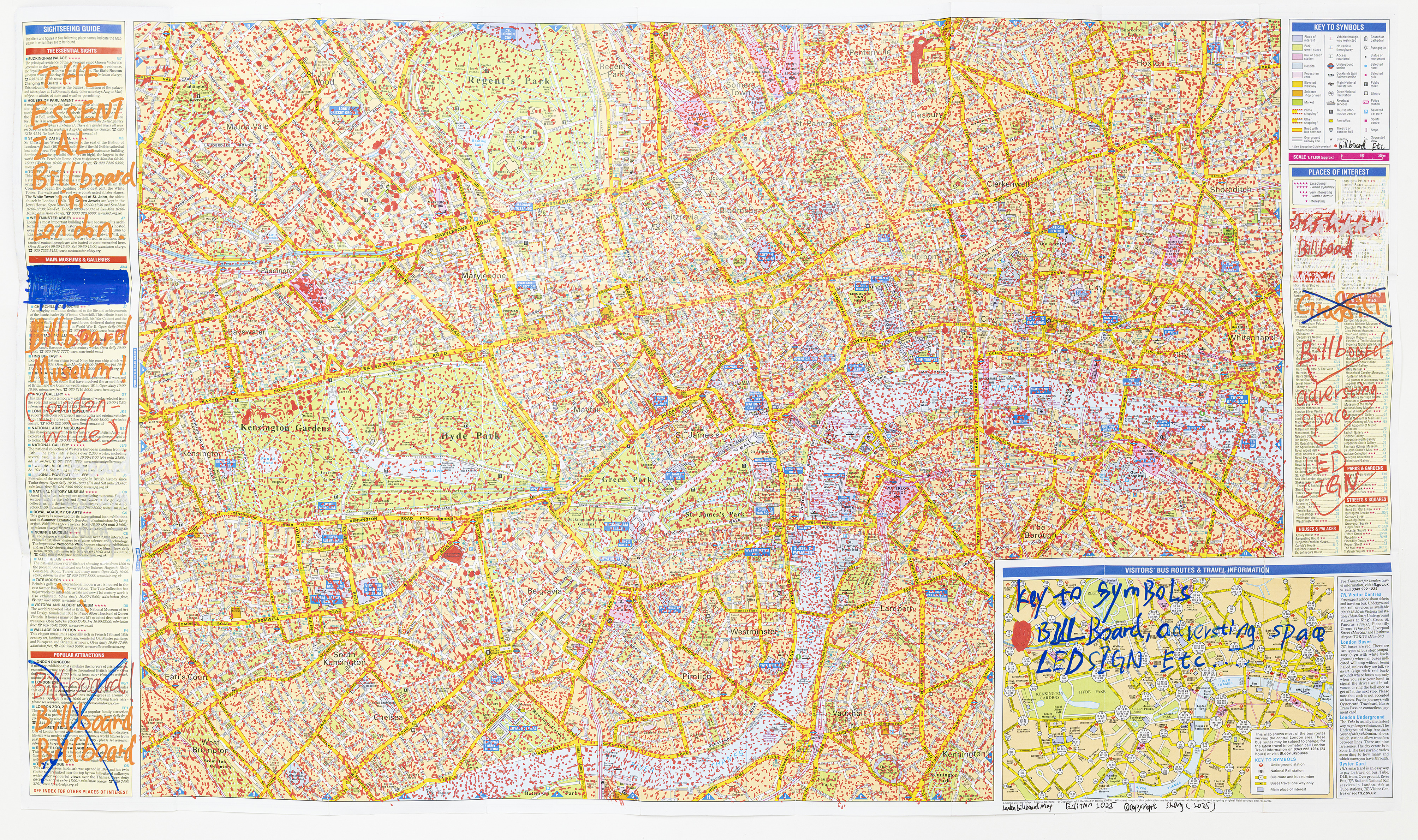
Perceptual Cartography is a spatial notation method based on subjective experience rather than objective measurement. It transforms individual or collective feelings, impressions, and experiences of space into map language, in order to reveal phenomenological truths that conventional cartography ignores.
The method marks "presence" rather than precise coordinates. It does not pursue completeness but authenticity. Each mark represents not an object but a quality of experience: the feeling of a space, the weight of attention, the texture of occupation.
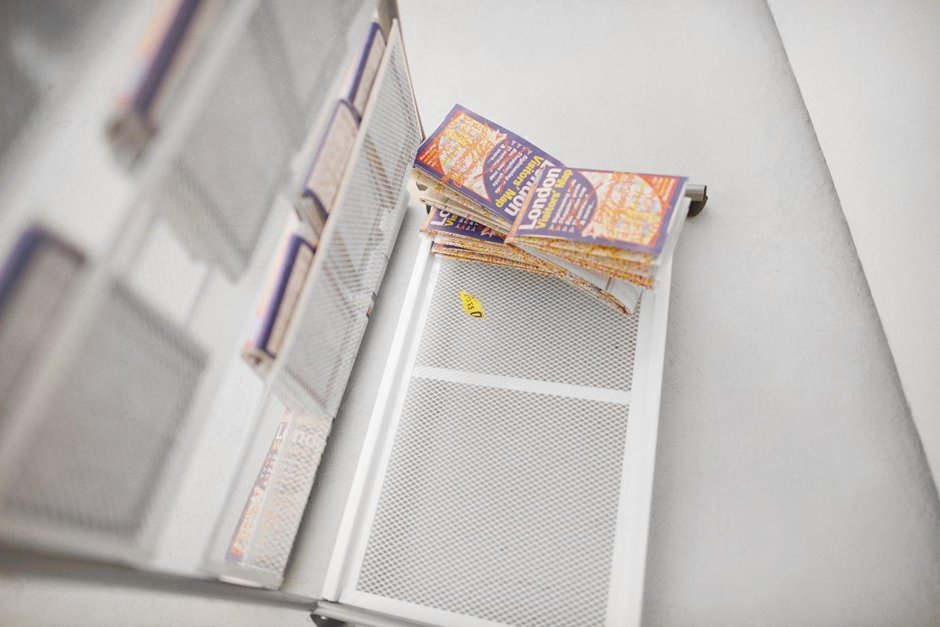
This method emerged from a simple observation on London streets. Advertising billboards and street graffiti both occupy public visual space without public consent. But one is legal, the other criminal. The answer is obvious but revealing: graffiti gets criminalised because it is "non-compensated" and "non-capitalist." Billboards get legalised because of taxation and capital logic. Both hijack attention, but commercial capital's purchase of attention is protected while individuals reclaiming it are prosecuted.
I wanted to make this asymmetry visible not through theoretical argument but through direct intervention in how we perceive and map urban space. Working on these maps led me to examine the legal frameworks themselves. I found the Criminal Justice Act and Criminal Damage Act provisions used to punish street graffiti, and began systematically replacing terms: "graffiti" became "advertising," "criminal damage" became "commercial damage." Applied word for word, the laws punishing graffiti become entirely reasonable when directed at advertising. Which reveals that their "legitimacy" is not built on justice but on capital's ability to pay.
The project also questioned objective representation itself. When you place two globes side by side (one conventionally coloured, one stylised) neither is closer to "reality." Every representation of space is a choice; every choice carries a position; every position quietly disciplines how we perceive. Cartography has never been about recording the world. It has always been about constructing it. Perceptual Cartography makes that construction visible.